A depth-first look at statistics.

1-10 hours,
synchronous

Group or individuals

Participatory, Face-to-face or Online

Novices to Advances
Purpose and Aims

This exercise is inspired by the excellent pedagogical book The 5 Elements of Effective Thinking by Burger and Starbird. In the book, it is explained that you don’t really know a concept unless you are able to explain it and all that it encompasses.
We used that exercise several times in the e-ReproNim FENS NENS Cluster to examine technical topics in statistics. The students themselves also organised the exercise on their own, in their study group, and we know of students using it individually in their PhD.
The aim of the exercise is engage a conversation with the group about a particular topic, and drill down. Typically students may believe they know and master a given concept, but when they are asked to explain it, they realise there are still grey areas or blindspots, forcing them to go down a level.
For instance, if the topic of discussion is correlation, students will typically explain that it is a relationship between two factors; the convenor then can push them to explain what relationship means, then discussing what linear means as opposed to non-linear, and how that may manifest in data or be represented in models.
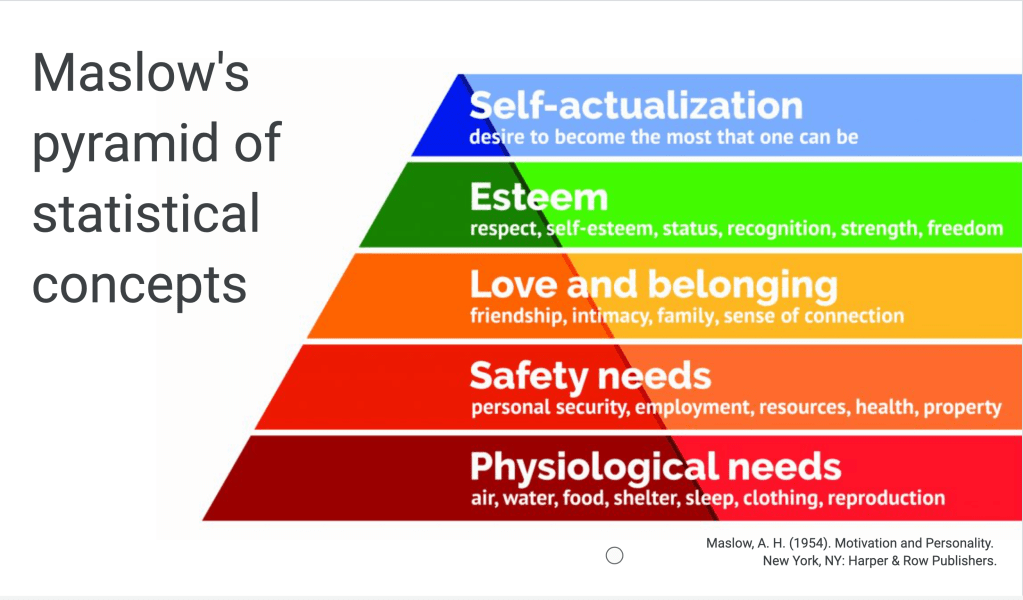
The concepts can then be placed on a pyramid akin to Maslow’s hierarchy of needs, going from the higher-level to fundamental concepts on which everything stands.
Preparation
We chose to apply the exercise to concepts of statistics, but there is no reason why the exercise wouldn’t work in other domains.
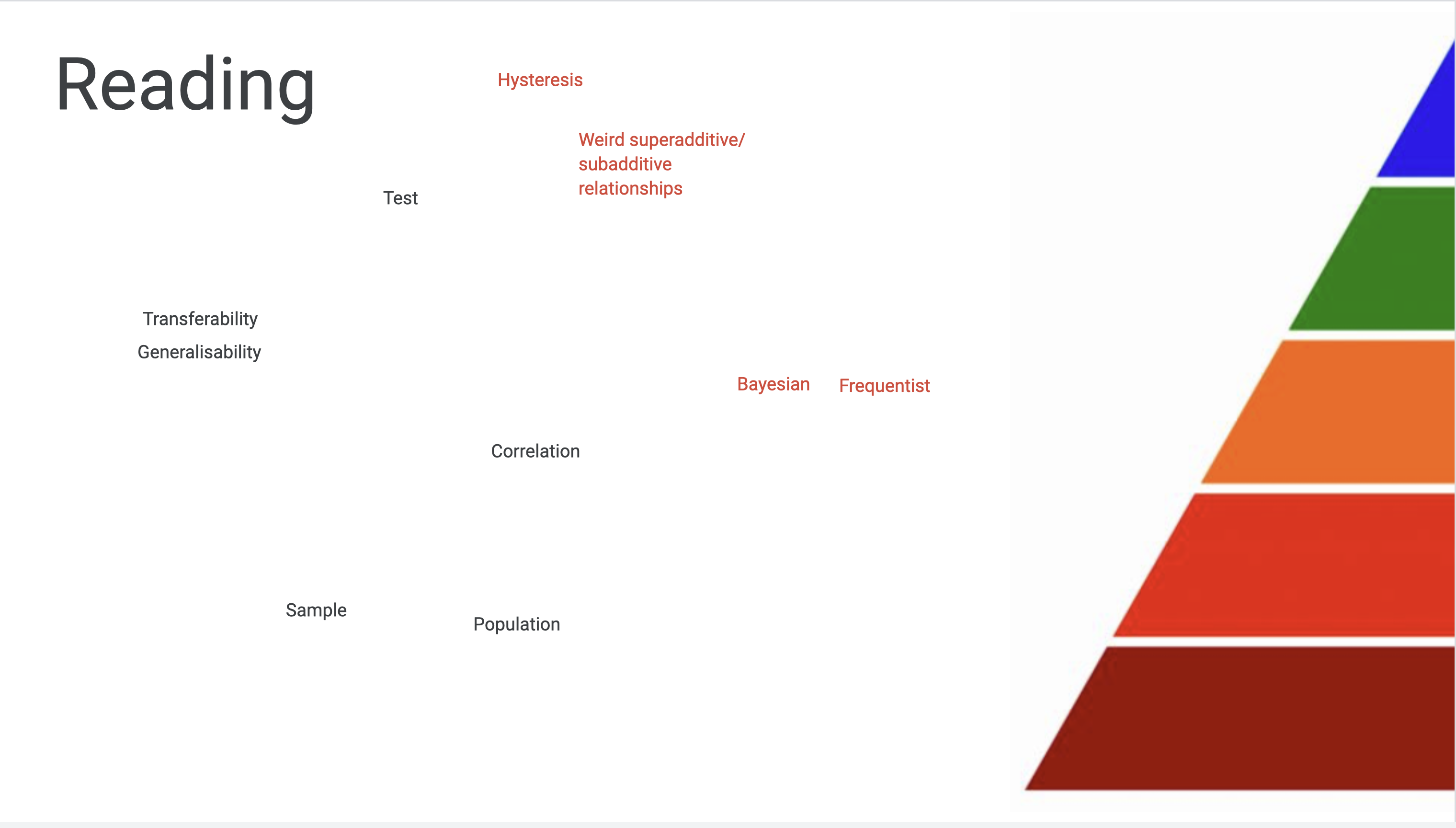
We provided students with a non-exhaustive word cloud of concepts in statistics, organised randomly.

The task was then, as a group, to place the word in Maslow’s pyramid, explain it, and drill down to identify the most basic level of underlying concepts.
Depending on how confident the students are, the convenor can choose to first reorganise the word cloud and free-associate, or ask a student to pick a concept randomly from the list to place on the pyramid and explain.

The exercise can easily last for hours, and be repeated over several session.
In our cohorts, groups of students chose to employ the exercise in their own study group, and individually for their PhD training.
 repro.school
Leave a comment